Active Rebalancing: An IT Specialist on the Binaryx P2P Market


Bill is an IT specialist. He thinks about systems — queues, batches, monitoring — for a living. On Binaryx he applies the same thinking to his portfolio: two positions, an allocation target, and the P2P secondary market as the rebalancing tool. The P2P market is what made him commit. Here's why.
Investor profile
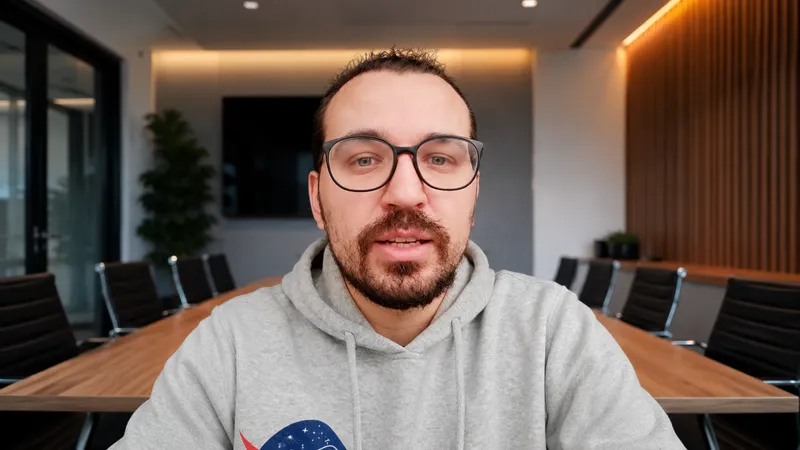
"I treat my portfolio the way I'd treat a production system: monitor the metrics, balance the load, and don't touch what isn't broken. The P2P market lets me rebalance like I'd resize a server pool — quickly, without waiting for a maintenance window."
— Bill (Video), IT Specialist
Bill’s video review
| Metric | Value |
|---|---|
| Number of invested projects | 2 operating rentals (Karra Loft 3A, Awwa Boutique Hotel) |
| Average APR (across portfolio) | ~12.70% blended (verify against dashboard) |
| Total return to date (USDT) | Cumulative USDT TBD — verify against dashboard |
| Status on platform | ~10 months (verify) |
The P2P market as portfolio infrastructure
Most investors treat a secondary market as an emergency exit — you go there when you need to leave. Bill treats it as infrastructure: when a position drifts from his target allocation, he sells a fraction and redeploys. The granularity of tokens makes that practical, in a way traditional real estate does not.
Why use P2P to rebalance instead of waiting?
"Because allocation drift is real. I started at 60% Karra Loft 3A and 40% Awwa Boutique Hotel. Six months in, Awwa had appreciated faster on the secondary market and the mix was 45/55. In traditional real estate I'd have waited a sale cycle or bought on the other side to compensate. On P2P, I sell a small fraction of Awwa, buy on Karra, back to 60/40 in hours. Transaction friction is trivial compared to the discipline benefit."
How do you decide an allocation target between two positions?
"Cash-flow shape. Karra Loft 3A is a lower-yield, stable rental — that's my 'steady cash flow' bucket. Awwa Boutique Hotel is a higher-yield rental, and it was a construction position that has since delivered — that's my 'growth' bucket. Different APRs, different price behaviour on the secondary market. I want both to carry meaningful weight: if growth eats stability I lose visibility; if stability crushes growth I lose upside. 60/40 reflects my preference for visibility, but 40/60 would be just as defensible."
Did the KYC and legal structure shape your decision to use the P2P actively?
"Significantly. The P2P market works because the tokens represent a real share of the cap table under Wyoming DAO LLC. When I sell a fraction of Karra to another investor, the registry updates enforceably. That's why KYC is required on both sides — without identification, you can't record an ownership transfer. For someone who rebalances every couple of months, that's reassuring — every transaction is a real ownership transfer, not just a database update."
Software and tools for active rebalancing
Bill lives in the Portfolio view and the P2P view. The Portfolio page shows him current composition by percentage; the P2P page shows him the order book and recent clearing prices for both positions. The Transaction History exports a CSV that he imports quarterly into a spreadsheet calculating friction costs against rebalancing benefit.
Off-platform, he keeps a simple allocation target in Notion (60/40 between Karra Loft 3A and Awwa Boutique Hotel, with ±5% tolerance). A monthly calendar alert prompts him to open Portfolio and check drift. If drift is in tolerance, he does nothing. If it crossed the threshold, he rebalances via P2P the same day. It's less a strategy than a routine.
Free financial consultation with Binaryx
Earn up to ~12% real returns in your portfolio with our financial advisor and personalised strategies.
Other resources to learn how to invest
If you actively use the P2P market to rebalance, these resources will sharpen your discipline.
- Tokenized Real Estate Rental Income: AWWA Hotel Case Study — one of Bill's holdings, verified data.
- Is Real Estate a Liquid Asset? — the cost of illiquidity in traditional real estate vs the tokenized exit.
- Binaryx Platform Update: May 2026 — Portfolio, Transactions, Documents — the tools used for rebalancing.
Conclusion
Bill's strategy boils down to one principle: portfolio hygiene is as important as initial selection. Two positions, an explicit allocation target, a tolerance threshold, and a P2P market that makes rebalancing a matter of hours rather than months. Nothing elegant — discipline does the work, not cleverness.
"I don't have to wait for an outside buyer — I adjust, and it goes back clean."
If you have two or three positions on Binaryx and allocation drift bothers you, his pattern is a sensible default: write a target allocation before drift appears, set a threshold above which you rebalance, and use the P2P market instead of waiting. Friction cost is low, discipline maintained is valuable. The P2P market exists precisely for this.
Practical next step: write your target allocation between your current positions today (a percentage per position, for example). Set a ±5% tolerance threshold. When drift exceeds it, open the P2P view and rebalance the same day. Review the target — not the drift — once a quarter.
Book a Binaryx consultation to discuss a portfolio-hygiene strategy, or attend the next webinar for a P2P market demonstration.